Technology has expanded what is possible in education, but meaningful learning still begins with people. My philosophy of learning design and technology is rooted in my identity as a 6th-grade literacy teacher in a diverse Title I school, where accessibility, clarity, and emotional safety make or break a learner’s success. As I’ve moved through this instructional design program, I’ve developed a clearer understanding of how thoughtful learning design can uplift learners, both children and adults, by honoring their experiences, reducing barriers, and creating pathways for authentic engagement. I believe technology should be purposeful, human-centered, and aligned to sound instructional design principles so learners feel supported rather than overwhelmed. My work throughout this program has strengthened these beliefs and shaped how I create learning experiences that are engaging, equitable, and grounded in theory.
Foundations That Shape My Design
Several instructional design models and learning theories guide the way I build courses and learning experiences. Universal Design for Learning (UDL) is the foundation of my approach. UDL emphasizes providing multiple means of engagement, representation, and action/expression, which ensures that learners with diverse strengths, challenges, and preferences can access content meaningfully (CAST, 2018). This principle has guided every major project I’ve completed. For instance, when I created both a text-based resource and an animated video in TECH5263, I did so to offer two accessible pathways into the same concepts. In my LMS module, I intentionally included text, video, and an interactive activity to support learners who benefit from multimodal input, extended processing, or hands-on exploration.
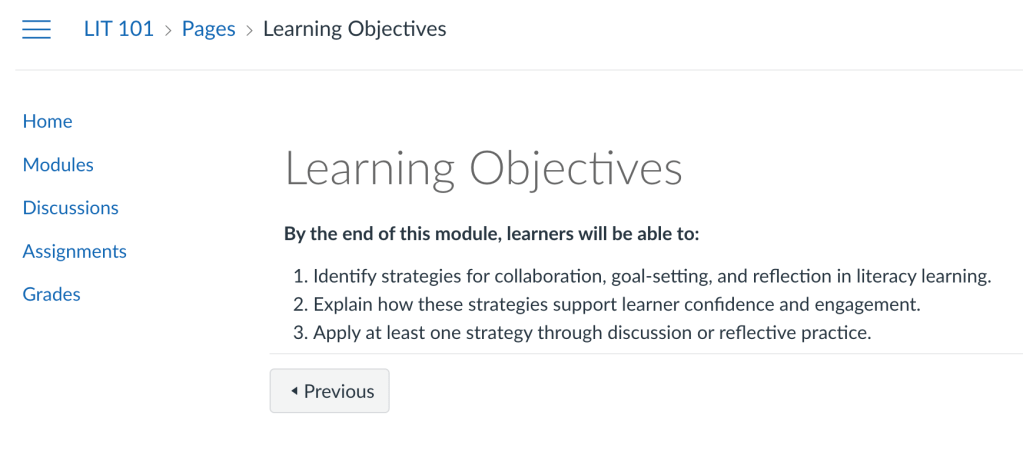
Figure 1: Module 1 Learning Objectives page showing alignment with Universal Design for Learning principles and backward design, providing clear, measurable outcomes for learners.
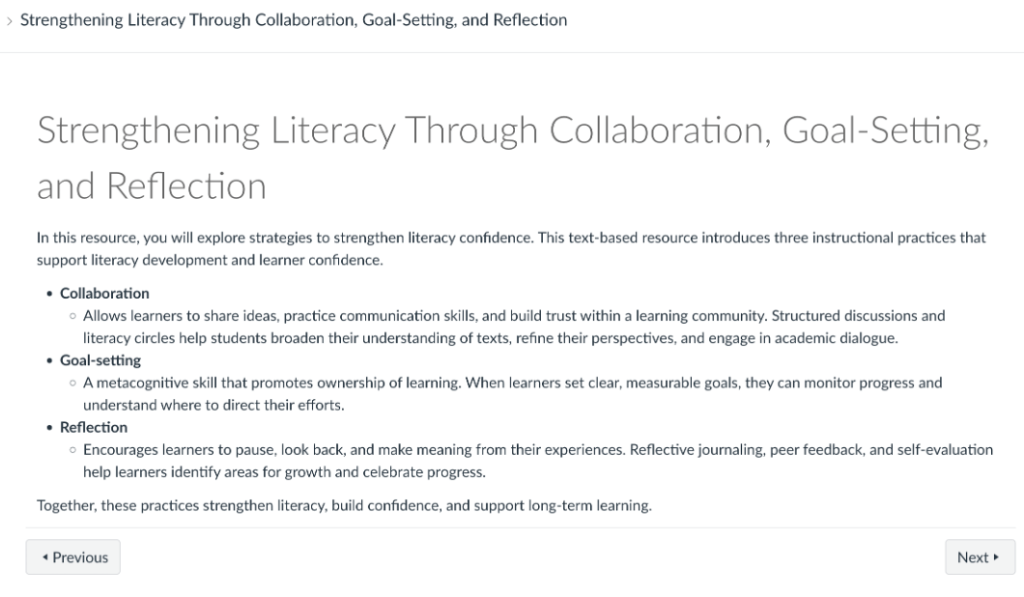
Figure 2: Text-based resource page illustrating multimodal content and accessible instruction, supporting diverse learner needs and literacy engagement.
Another key framework influencing my design philosophy is the Community of Inquiry (CoI) model, which highlights the importance of social, cognitive, and teaching presence in online environments (Garrison, Anderson, & Archer, 2001). I integrate this model especially when developing discussion boards and collaborative tasks. The discussion prompt I created in TECH5273, which appears in my Canvas module, was intentionally designed to strengthen social presence and encourage idea exchange rather than asking learners to post once and disappear. CoI reinforces my belief that online learning must still feel connected, communal, and relational to be effective.

Figure 3: Discussion Board prompt demonstrating application of the Community of Inquiry model by fostering social, cognitive, and teaching presence in an online learning environment.
Adult learning theory, particularly Knowles’ principles of andragogy, also plays a critical role in shaping my design decisions. Adults need learning that is relevant, flexible, and tied to real-world application (Knowles, Holton, & Swanson, 2015). This has influenced the authentic assessments I’ve built throughout this program, including the one featured in my LMS module. My design aims to give learners agency in how they show their understanding and ensure that tasks feel worth the time and emotional energy adults juggle alongside work, family, and other responsibilities.
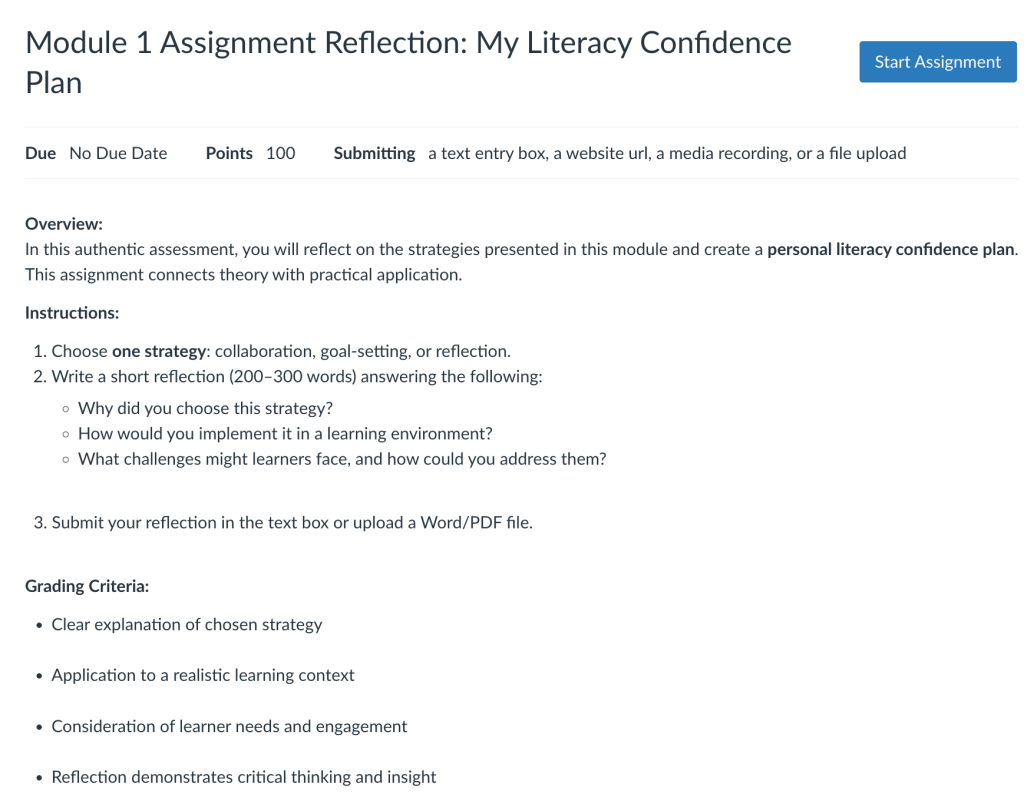
Figure 4: Reflection assignment page showing a real-world, meaningful task that promotes learner agency and supports adult learning principles.
Finally, I apply both ADDIE and backward design when structuring learning experiences. These models emphasize defining clear learning objectives before creating activities or assessments to ensure alignment and intentionality. In my Canvas module, the learning objectives are explicitly stated at the beginning, and every resource and activity ties back to them. Precise alignment helps learners stay focused and reduces cognitive load.
The Role of Technology in Learning
In my philosophy, technology should serve learning, not distract from it. I intentionally avoid “adding tech for the sake of tech.” Instead, I choose tools that support clarity, accessibility, and engagement. For example, in my Genially interactive activity, I used narrative elements and simple navigation to guide learners through problem-solving rather than relying on flashy animations that could overwhelm them.
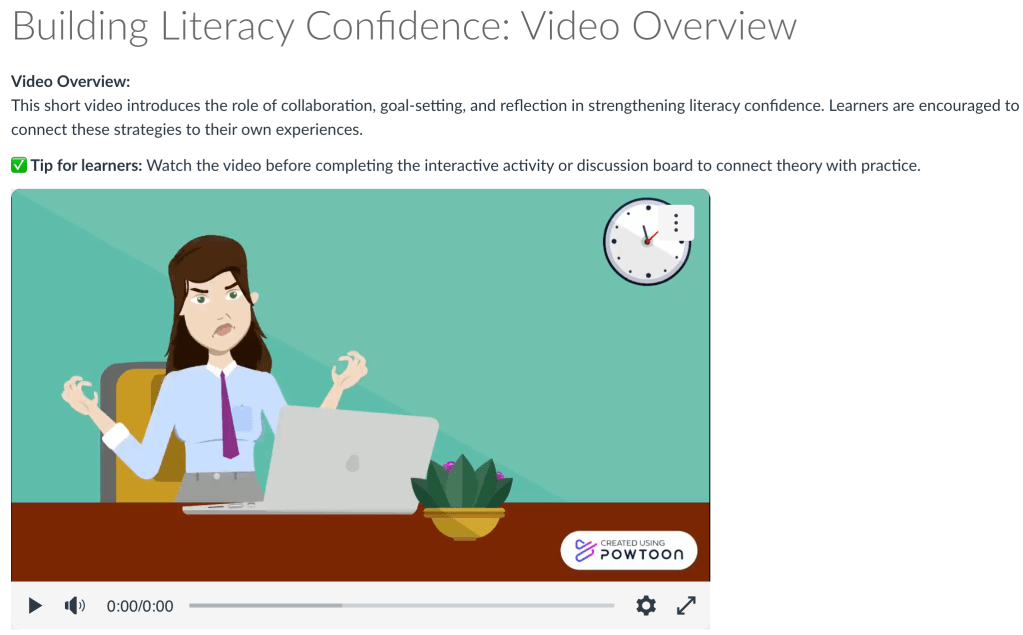
Figure 5: Video resource page offering an additional pathway for learning, exemplifying purposeful technology integration to enhance engagement and understanding.
Technology should remove barriers. It should help learners with visual, linguistic, or cognitive challenges access content more comfortably. It should support pacing, practice, and confidence-building. When used thoughtfully, technology enhances equity, which is especially important in both K–12 and adult learning. This belief drives how I integrate digital tools and why I designed my Canvas module with clean organization, minimal clutter, and consistent structure.
Core Commitments as a Learning Designer
Across my coursework, specific patterns consistently show up in my design approach. First, accessibility is always a priority. I ensure that every image has alt text, that headings follow a logical structure, that instructions are written in plain, supportive language, and that learners know exactly where they are in the module at all times. My Canvas module reflects this through consistent page formats, clear labels, and predictable navigation.
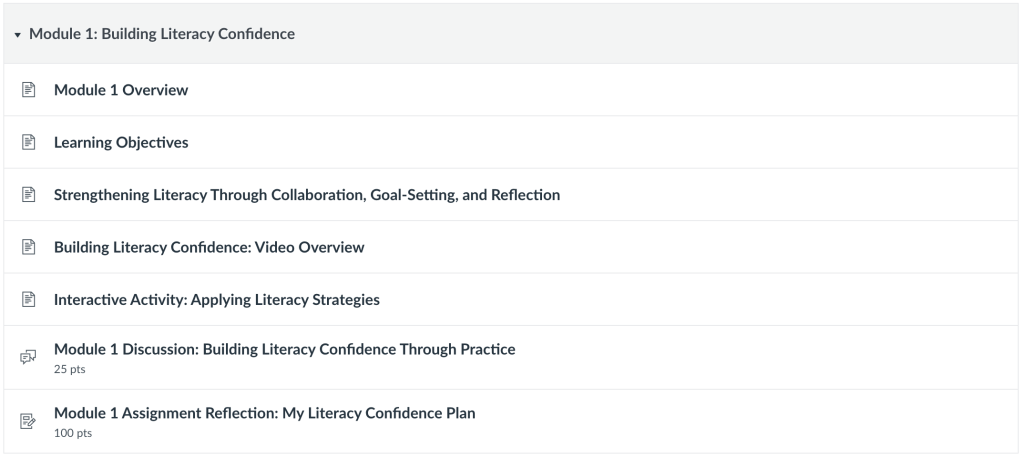
Figure 6: Module 1 Overview page illustrating consistent layout, clear navigation, and accessible design to support learner clarity and reduce cognitive load.
Second, multimodal learning is central to my philosophy. People learn differently, and providing options empowers them. Whether I’m creating an animated video, a text-based guide, or a collaborative discussion, my goal is to reach learners through the method that works best for them.
Third, I value authenticity and relevance. Assessments should connect to real-world skills. Learning activities should feel meaningful. The authentic assessment in my Canvas module encourages learners to apply skills in real-world contexts rather than completing a traditional test. Adults especially need relevance, and I design with that in mind.
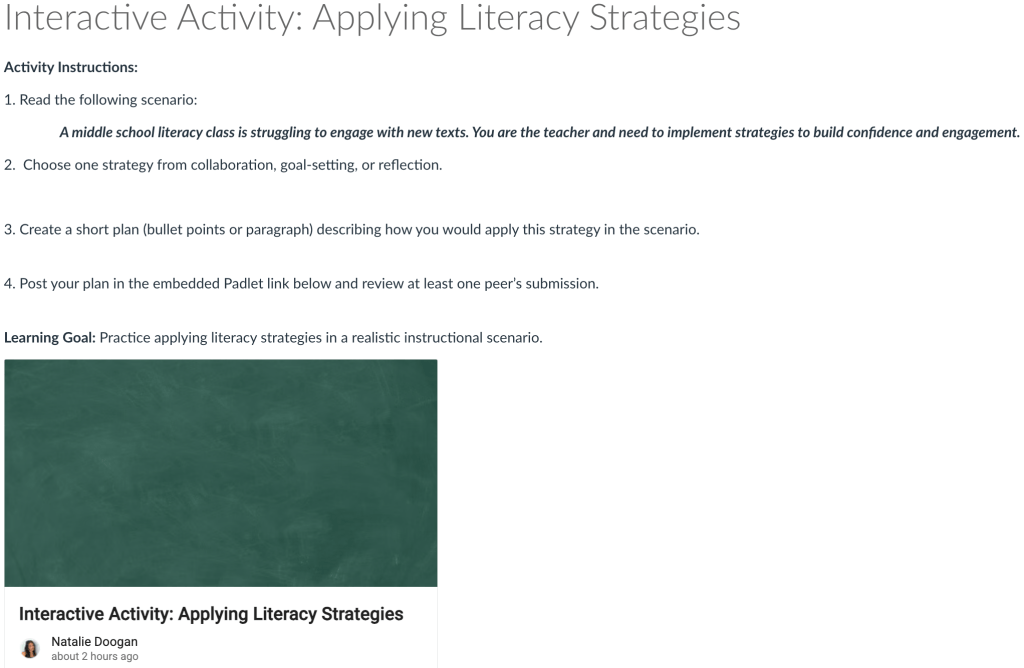
Figure 7: Padlet interactive activity page that highlights hands-on practice, collaborative engagement, and the application of literacy strategies in a structured scenario.
Fourth, I consider social-emotional learning and psychological safety essential components of instructional design. My background teaching trauma-impacted learners reminds me that confidence, encouragement, and emotional safety matter just as much as content knowledge.
Elements of an Effective Learning Environment
Based on theory and experience, I believe effective learning environments share several essential elements:
- Clarity and transparency in expectations
- Consistent structure to reduce cognitive load
- Accessible and inclusive design
- Active engagement through discussion and hands-on activities
- Authentic assessments that matter beyond the course
- Opportunities for reflection
These principles guided every design decision I made in the Canvas module, from the home page structure to the sequencing of resources.
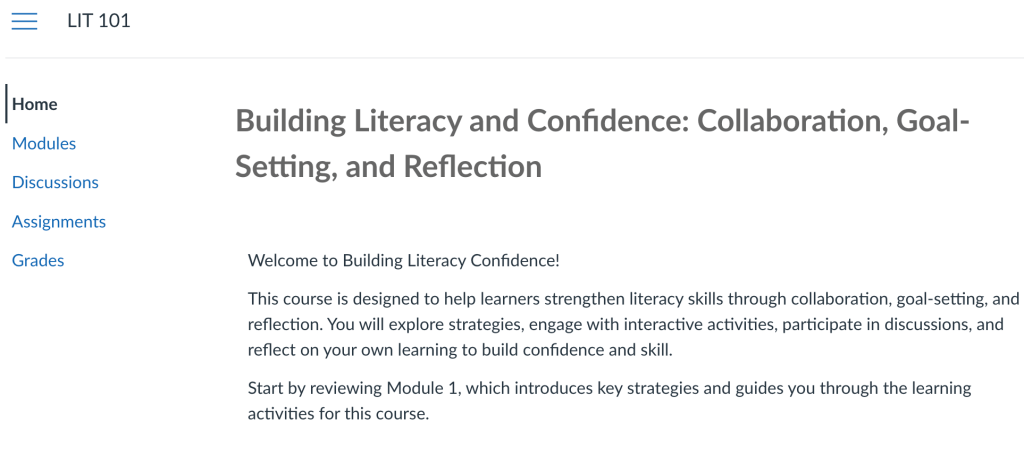
Figure 8: Module 1 Home/Welcome page showing a clear introduction to the course, intuitive navigation, and an organized structure that reflects principles of accessibility, clarity, and learner engagement.
How My Canvas Module Reflects My Philosophy
My LMS module is a direct reflection of my philosophy of learning design and technology. I chose Canvas because of its clean layout, intuitive navigation, and accessibility-friendly features. The module begins with clear learning objectives, followed by multimodal resources that align with UDL principles. The discussion board embodies the Community of Inquiry model by promoting interaction and shared meaning-making. The authentic assessment emphasizes relevance and allows learners to demonstrate understanding through meaningful application. Throughout the module, I ensured consistency, accessibility, and purposeful use of technology, all central elements of my philosophy.
Conclusion
My philosophy of learning design and technology has been shaped by my teaching experience, the instructional design principles studied throughout this program, and the hands-on projects I’ve created. I believe learning should be accessible, engaging, and meaningful, and that technology should support, not overshadow, the learning process. As I move forward in the field, I will continue to design with empathy, clarity, and intention, ensuring that every learning experience reflects my commitment to equity and human-centered design.
References
CAST. (2018). Universal Design for Learning guidelines version 2.2.
Garrison, D. R., Anderson, T., & Archer, W. (2001). Critical inquiry in a text‐based environment: Computer conferencing in higher education. The Internet and Higher Education, 2(2–3), 87–105.
Knowles, M., Holton, E., & Swanson, R. (2015). The adult learner (8th ed.). Routledge.

 Natalie Doogan | Aspiring ID ePortfolio